+86 139 2233 0292

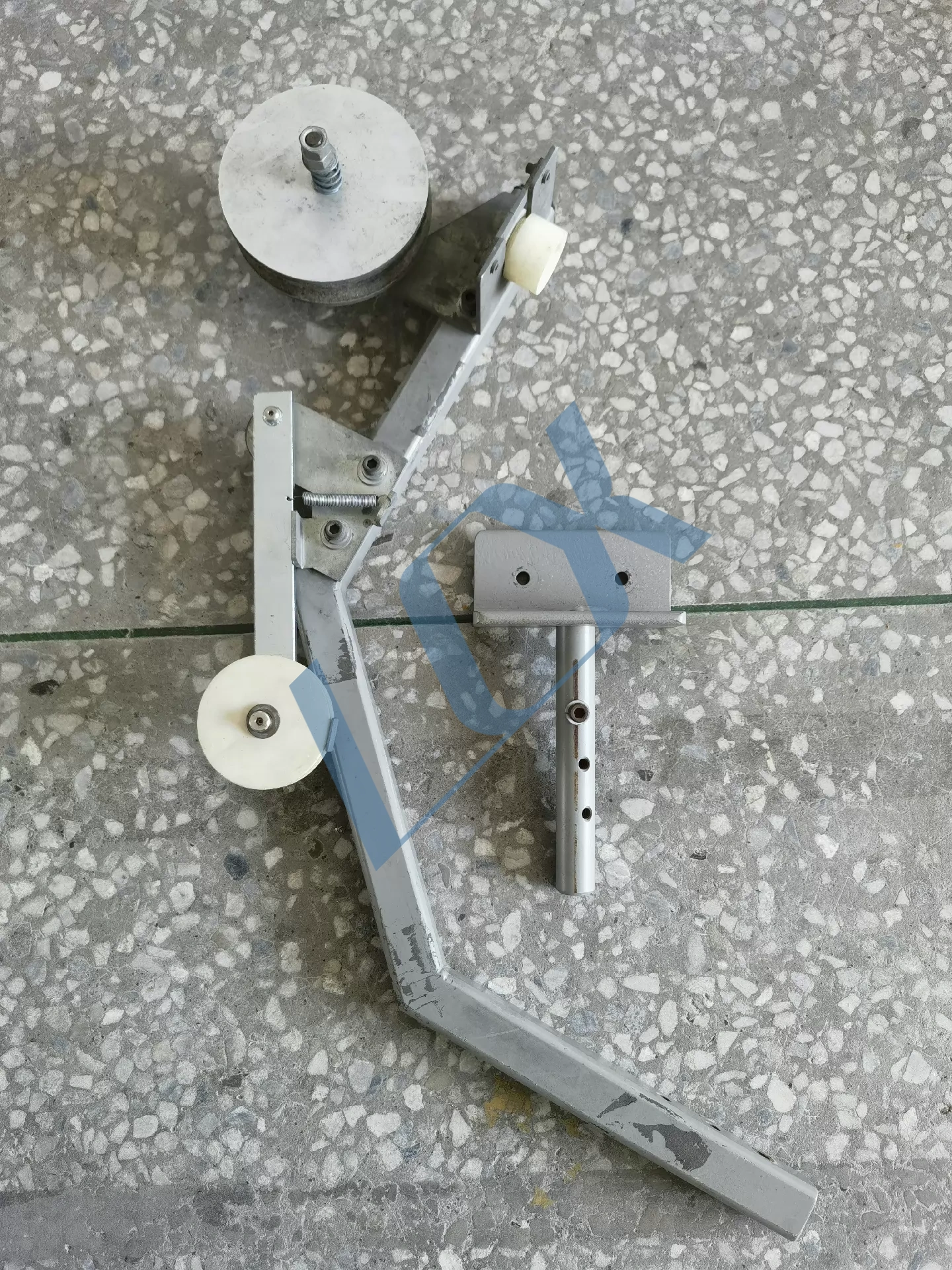
Universal PCB Jumper Station Feeding Device (PN: 47611201)
This is the core feeding mechanism of the Universal (Universal Instruments) automatic jumper station, specifically designed for PCB jumper insertion processes. It continuously feeds, tensions, and guides jumper wires, ensuring insertion accuracy and efficiency.
Share to:
Structure and Function Breakdown
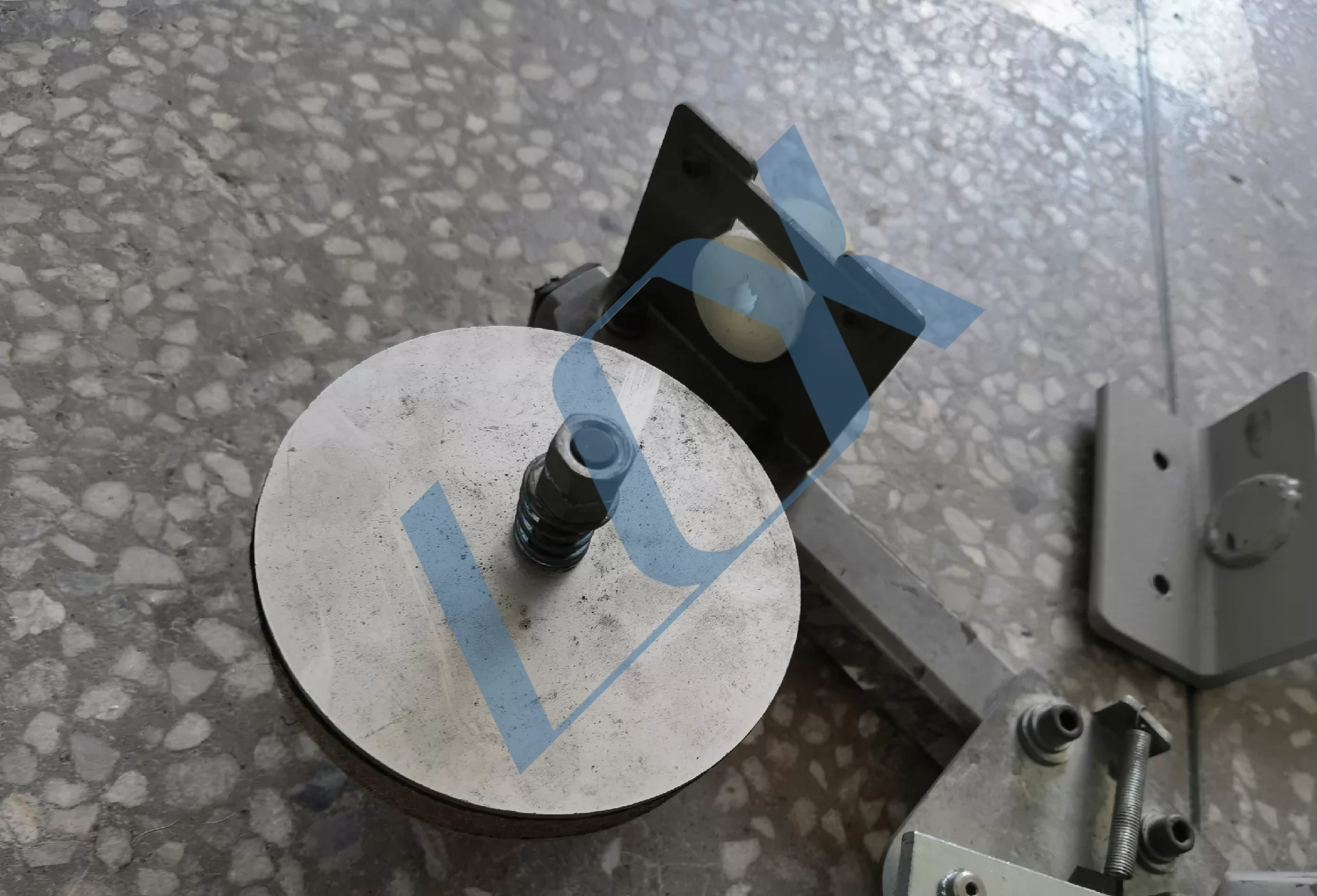
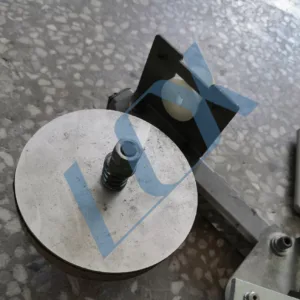
Counterweight Tension Mechanism (Disc + Spring Assembly)
The metal disc with spring and nut in the image is the tension counterweight wheel. Its core functions are:
* To provide constant reverse tension to the wire, preventing slack and coiling during feeding;
* To finely adjust the tension with the spring, adapting to jumper wires of different diameters;
* To maintain stable tension during feeding using gravity and leverage principles, preventing wire slippage or breakage.
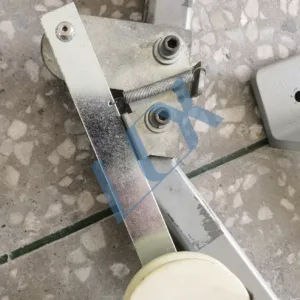
**Wire Feeding Guide Roller Assembly (White Nylon Rollers)**
The white nylon rollers on the device are wire feeding guide rollers:
The nylon material is wear-resistant and does not damage the wire insulation, reducing wire wear and the risk of wire jamming; Multiple rollers work together to form a wire guiding path, ensuring the wire is fed into the insertion head at a fixed angle and position; Some roller assemblies have bearing structures to reduce wire feeding resistance and improve wire feeding accuracy.
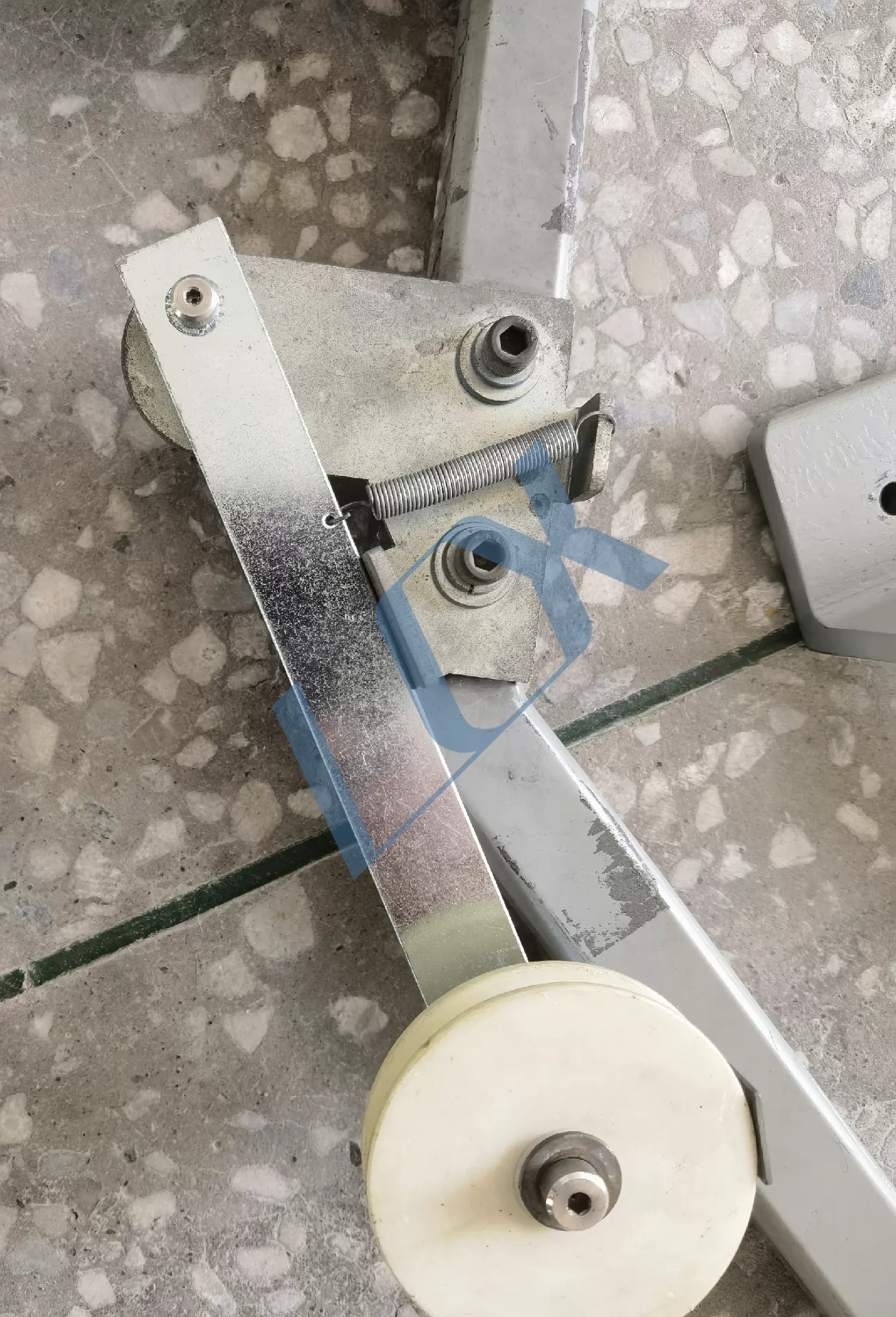
**Lever-Type Tensioning Arm (with Spring Assembly)**
The metal lever with a spring is the tension adjustment arm:
The spring provides elastic compensation, absorbing speed fluctuations during wire feeding and preventing wire breakage due to excessive instantaneous tension;
The lever structure can swing slightly with the wire feeding action, adapting to the intermittent wire feeding rhythm of the insertion machine;
It also serves as a mounting bracket, integrating the tension rollers and guide rollers into a modular component for easy disassembly and maintenance.
**Mounting Fixture (Metal Part on the Right)**
The independent metal bracket is the equipment mounting base, with positioning holes, used to fix the entire wire feeding device to the corresponding workstation of the insertion machine’s jumper station, ensuring precise alignment of the wire feeding path with the insertion head.
📌 Application and Maintenance Points
Compatible Models: Primarily used in the jumper insertion station of Universal series axial insertion machines (such as 6241F, VCD series, etc.), replacing traditional pre-cut jumpers and allowing direct use of reel-mounted wires, reducing material costs.
Common Faults and Troubleshooting:
* **Wire Feeding Slippage/Inaccuracy:** Check if the tension counterweight is loose, if the guide wheel bearing is stuck, or if the tension spring is fatigued, causing insufficient tension.
* **Wire Jamming/Breakage:** Check if the guide wheel is worn or deformed, if there are burrs on the wire path, or if the tension is set too high.
* **Abnormal Noise/Vibration:** Check if the mounting bracket fixing screws are loose, or if the counterweight wheel bearing is dry; lubrication is required.
Maintenance Recommendations: Regularly clean the dust and oxide layer from the guide wheel and tension wheel, and check the elasticity of the tension spring and the tightness of the screws. This can significantly extend the life of the device.
LCX Copyright © 2026 All Rights Reserved.