+86 139 2233 0292

Tank Number Process Name Core Function Cleaning Medium Ultrasonic Parameters Temperature Parameters Process Time Auxiliary System Configuration
1. Ultrasonic Rough Cleaning 1. Removes heavy oil stains such as cutting oil, solder paste, and flux. Alkaline water-based cleaning agent (5% concentration) + pure water. Frequency: 40kHz. Power density: 0.6-0.8W/cm². Mode: Continuous ultrasound 50-55℃. Accuracy: ±2℃ 3-5min. Agitation mechanism (up and down stroke 20-30mm, frequency 10-15 times/min), oil-water separation, circulating filtration (5μm filter element)
2. Ultrasonic Rough Cleaning 2. Deeply removes stubborn residues and submicron particles. Alkaline water-based cleaning agent (3% concentration) + pure water. Frequency: 40kHz. Power density: 0.5-0.7W/cm². Mode: Sweep frequency ultrasound 50-55℃. Accuracy: ±2℃ 3-4min. Agitation mechanism, circulating filtration (1μm filter element) Filter cartridge), overflow drainage
3. Ultrasonic Fine Cleaning 1 Removes cleaning agent residue and refines cleaning. Pure water (resistivity ≥10MΩ・cm) Frequency: 68kHz Power density: 0.4-0.6W/cm² Mode: Dual-frequency ultrasound (40+68kHz) 45-50℃ Accuracy: ±2℃ 2-3min Agitation mechanism, circulating filter (0.5μm filter cartridge), bubbling system
4. Ultrasonic Fine Cleaning 2 Further improves cleanliness and removes microparticles. Pure water (resistivity ≥12MΩ・cm) Frequency: 80kHz Power density: 0.3-0.5W/cm² Mode: Sweep frequency ultrasound 45-50℃ Accuracy: ±2℃ 2-3min Agitation mechanism, circulating filter (0.2μm filter cartridge), bubbling system
5. Pure Water Rinse 1 Replaces residual cleaning agent and initially reduces contamination. Pure water (resistivity ≥15MΩ・cm) 1. **Ultrasonic Rinse (Bubbling Rinse)** 40-45℃
Accuracy: ±2℃ 2-3min Bubbling system, overflow drainage, circulating filtration (0.1μm filter cartridge)
2. **Pure Water Rinse** 2. Deep replacement, reducing TOC residue. Pure water (resistivity ≥16MΩ・cm). No ultrasonic rinse (bubbling rinse) 40-45℃
Accuracy: ±2℃ 2-3min Bubbling system, overflow drainage, circulating filtration (0.05μm filter cartridge)
3. **IPA Ultrasonic Rinse** 1. Removes watermarks and organic residue, dehydration pretreatment. Electronic grade anhydrous IPA (purity ≥99.9%). Frequency: 80kHz
Power density: 0.3-0.4W/cm²
Mode: Intermittent ultrasonic (on 3s / off 2s) 35-40℃
Accuracy: ±2℃ 2-3min Explosion-proof system, circulating filtration (0.05μm filter cartridge), condensate recovery
4. **IPA Ultrasonic Rinse** 1. Removes watermarks and organic residue, dehydration pretreatment. Electronic grade anhydrous IPA (purity ≥99.9%). Frequency: 80kHz
Power density: 0.3-0.4W/cm²
Mode: Intermittent ultrasonic (on 3s / off 2s) 35-40℃
Accuracy: ±2℃ 2-3min Explosion-proof system, circulating filtration (0.05μm filter cartridge), condensate recovery
5. IPA Ultrasonic Rinsing 2 Final Dehydration, Thoroughly Removing Aqueous Residue Electronic Grade Anhydrous IPA (Purity ≥99.9%) Frequency: 120kHz Power Density: 0.2-0.3W/cm² Mode: Intermittent Ultrasonic 35-40℃ Accuracy: ±2℃ 2-3min Explosion-proof system, circulating filtration (0.03μm filter element), condensate recovery
9 IPA Slow Pull Dehydration Uniform pull to form a uniform liquid film, avoiding water marks Electronic Grade Anhydrous IPA (Purity ≥99.9%) No Ultrasonic 35-40℃ Accuracy: ±2℃ 1-2min Slow pull mechanism (speed 2-5mm/s), automatic liquid level control
10 Hot Air Drying 1 Preliminary Drying of IPA Residue, Low-Temperature Pre-Drying Clean Hot Air (HEPA H14 Grade Filter) No Ultrasonic 60-65℃ Accuracy: ±2℃ 3-4min Hot air circulation, adjustable wind speed (5-10m/s), exhaust gas emission
11 Hot Air Drying 2. Deep drying to ensure no residue. Clean hot air (HEPA H14 grade filter). No ultrasound. 65-70℃
Accuracy: ±2℃. 3-4min. Hot air circulation, adjustable wind speed (8-12m/s), dew point monitoring.
12 Vacuum Drying (Optional) For high-precision workpieces, thoroughly removes micropore residue. Vacuum environment. No ultrasound. 70-75℃
Accuracy: ±2℃. 5-8min. Vacuum degree ≤-0.095MPa, nitrogen protection, temperature uniformity ±1℃.
Share to:
Fully Automatic Multi-Tank Ultrasonic Cleaning Machine for Optical Modules
This equipment is a fully automatic multi-tank ultrasonic cleaning machine specifically designed for optical module mass production lines. It belongs to the core equipment category of “pre-treatment/whole component cleaning” in optical module cleaning equipment, and is specifically used for batch deep cleaning of components such as optical module metal bases, TOSA/ROSA modules, ceramic ferrules, and PCB boards.
I. Core Positioning and Applicable Scenarios
1. Core Purpose
This machine addresses process contaminants (flux, solder paste residue, cutting oil, dust, fingerprint grease, epoxy adhesive residue, etc.) generated during optical module production. It completes a fully automated cleaning process from rough cleaning, fine cleaning, rinsing to drying, ensuring the packaging yield and long-term reliability of high-speed optical modules such as 400G/800G/1.6T.
2. Typical Cleaning Items
* Optical module metal casing, chip base, heat sink
* TOSA/ROSA optical sub-components, ceramic ferrules
* Optical module PCB board, post-SMT flux residue cleaning
* Pre-treatment cleaning of optical components such as lenses and filters
II. Equipment Structure and Working Principle
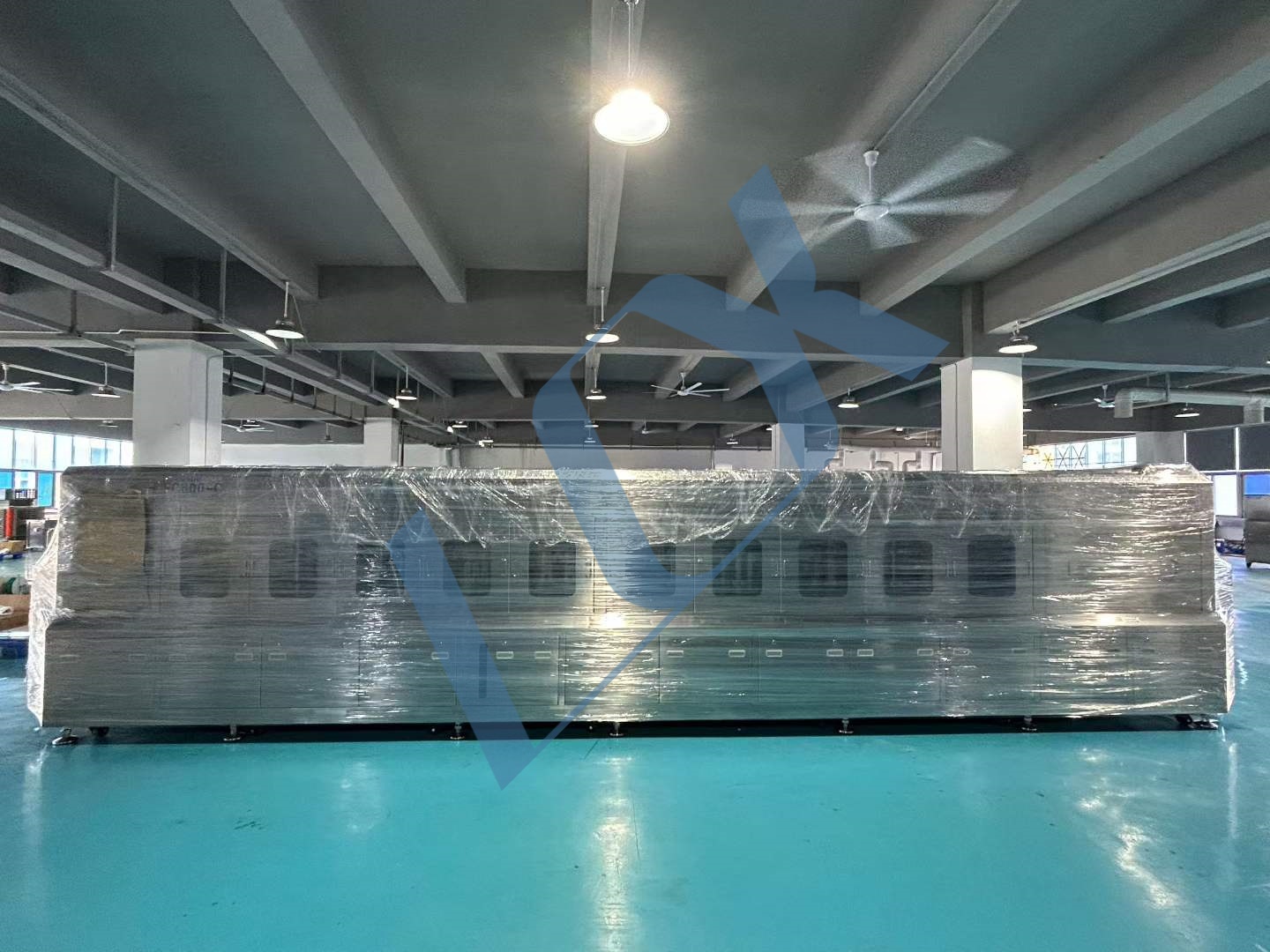
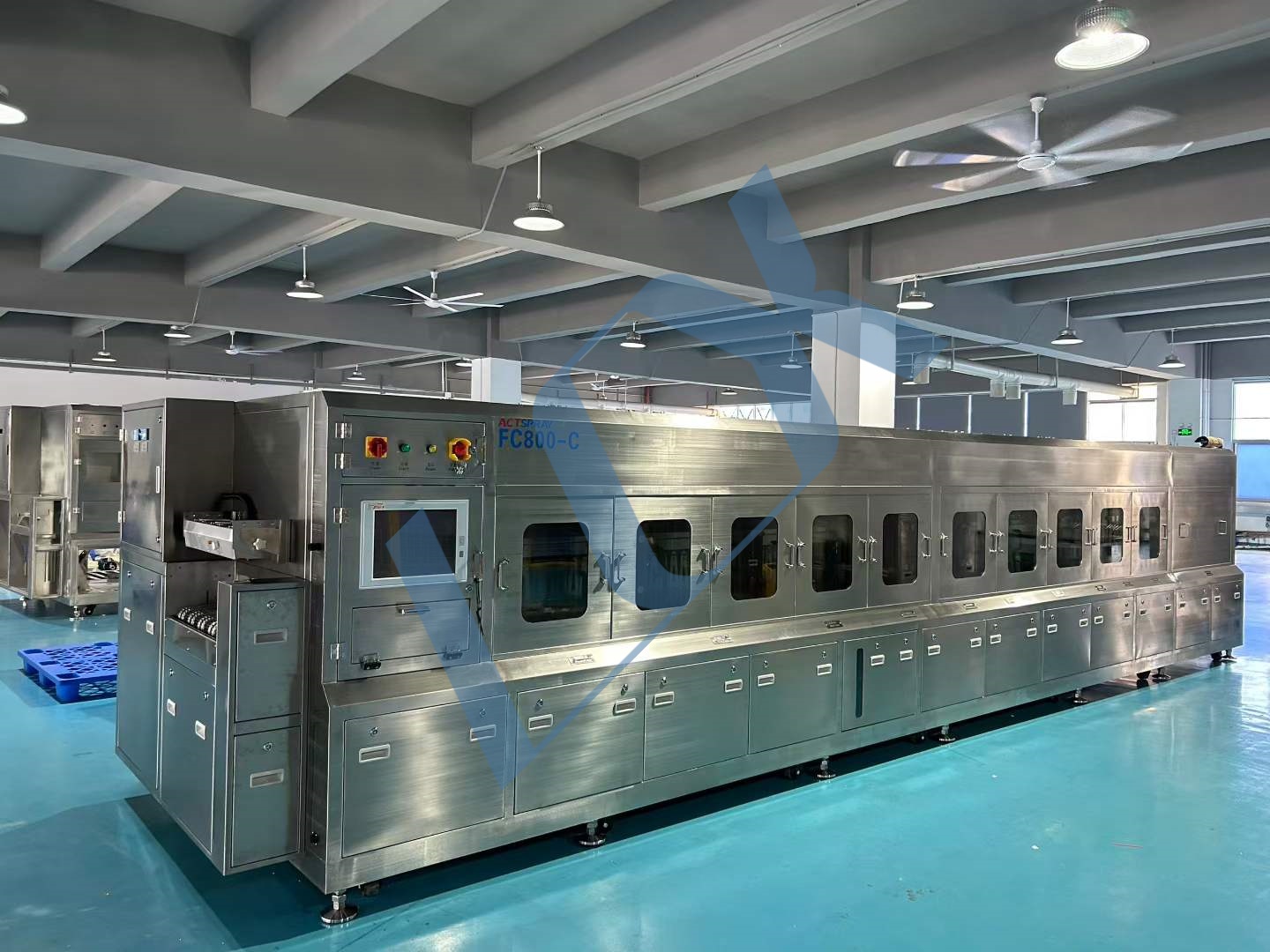
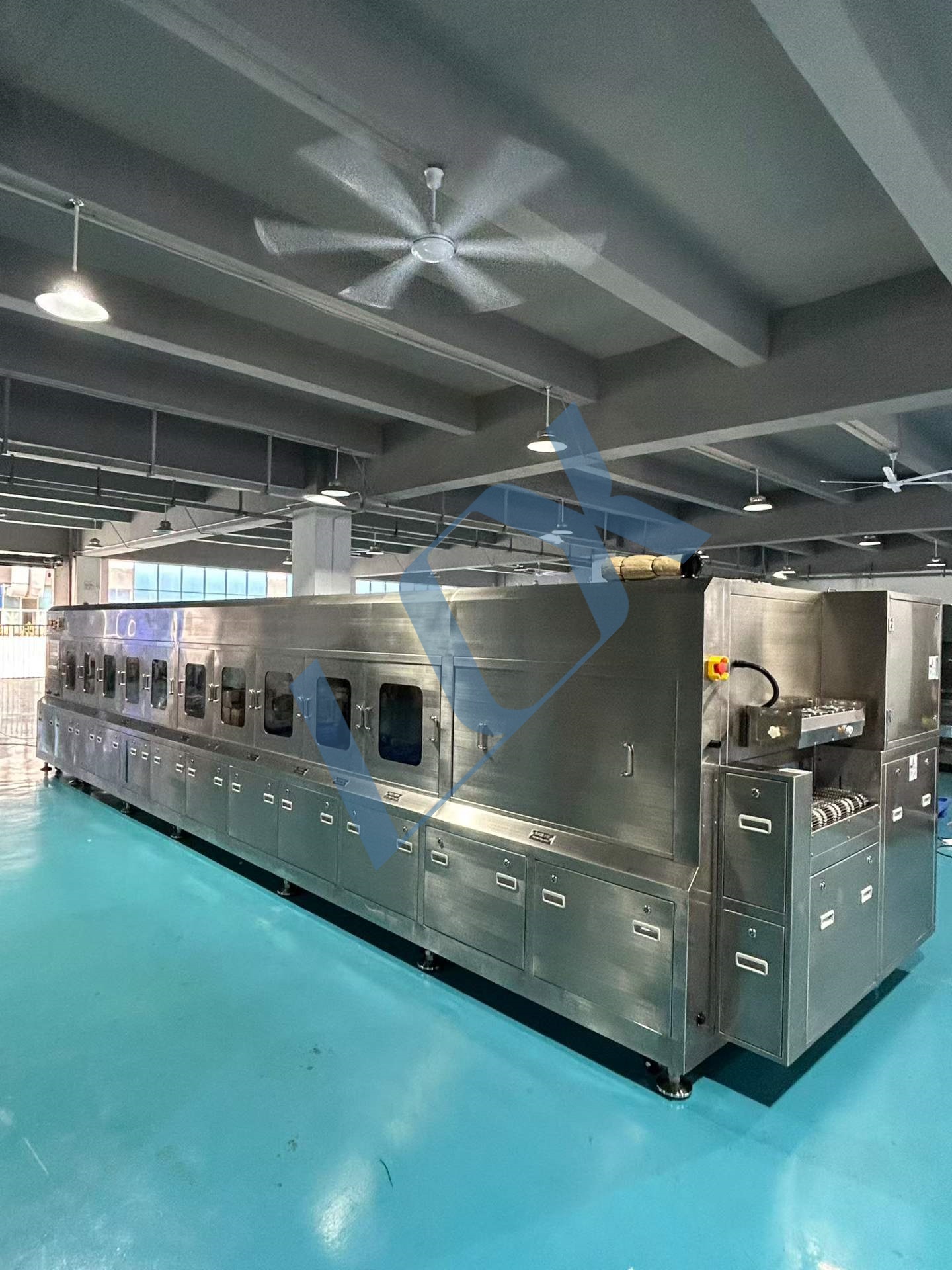
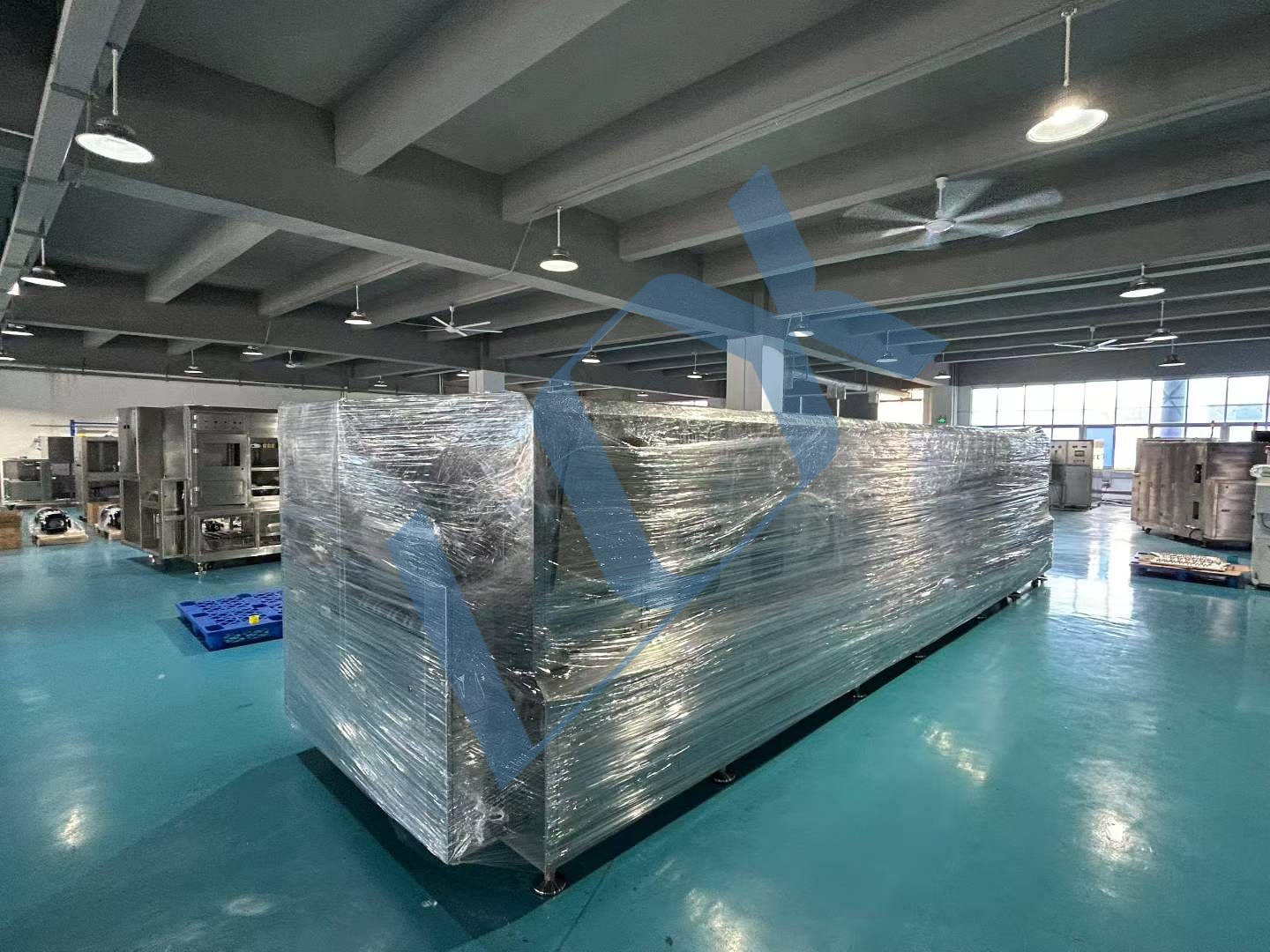
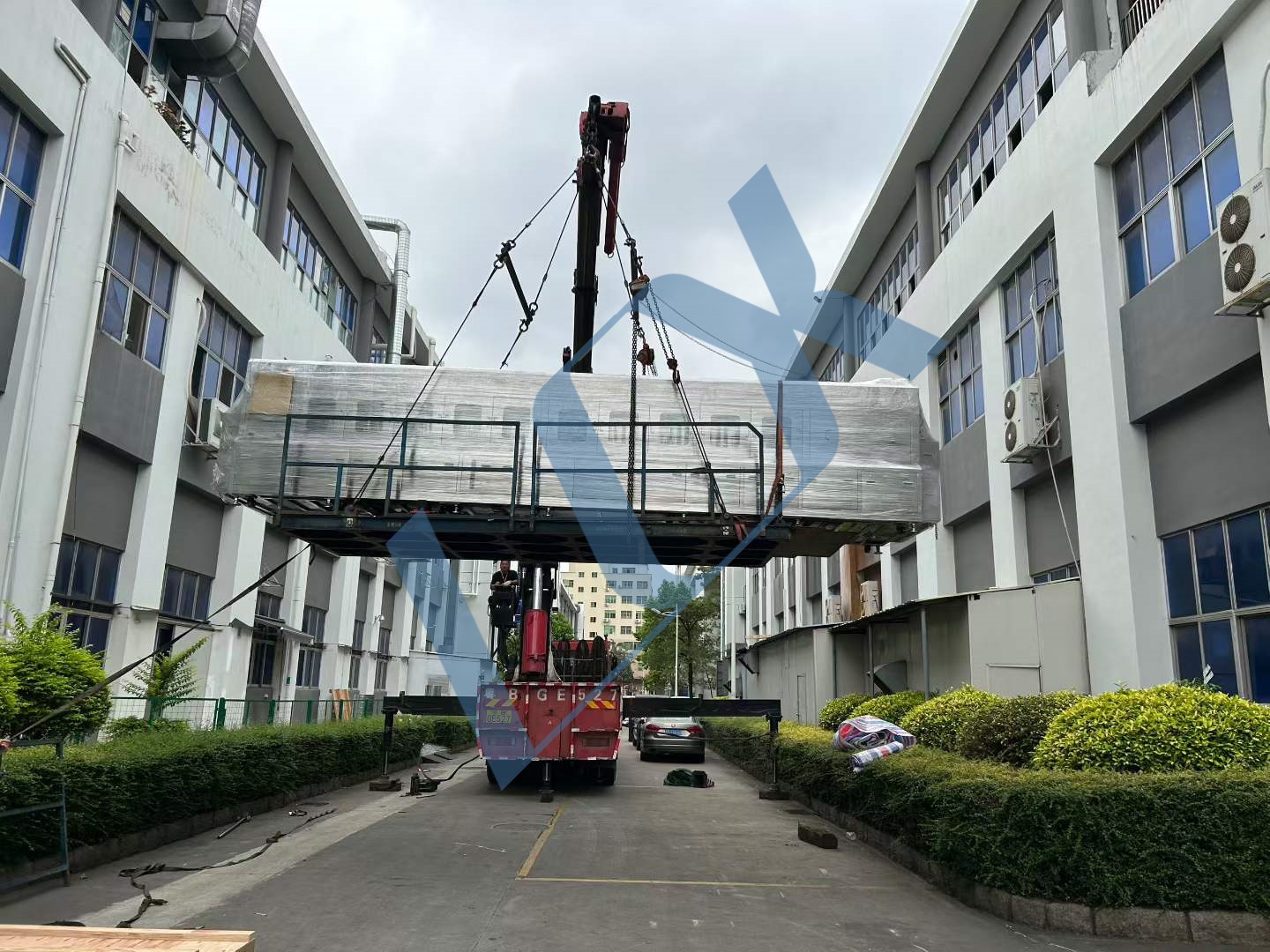
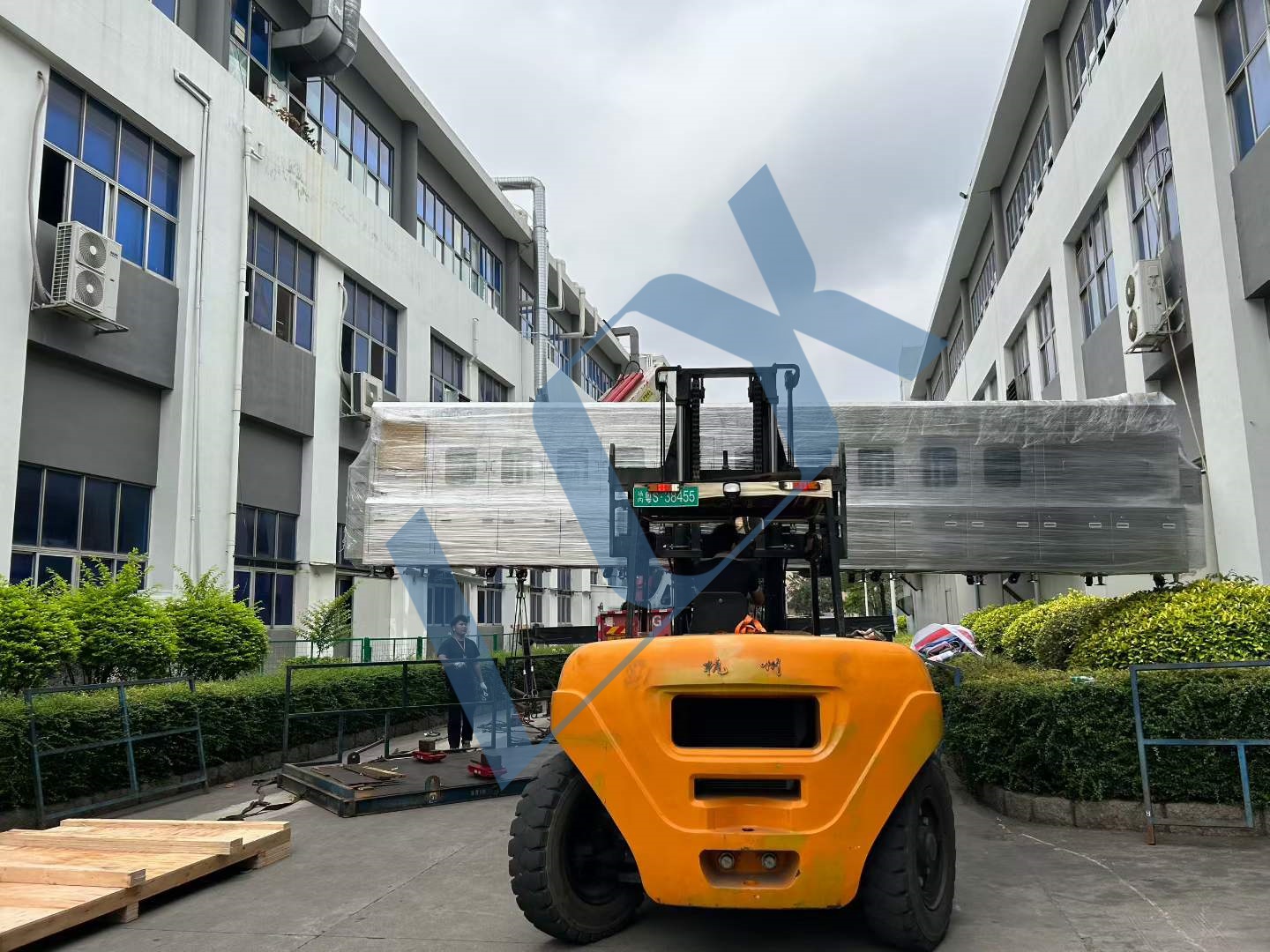
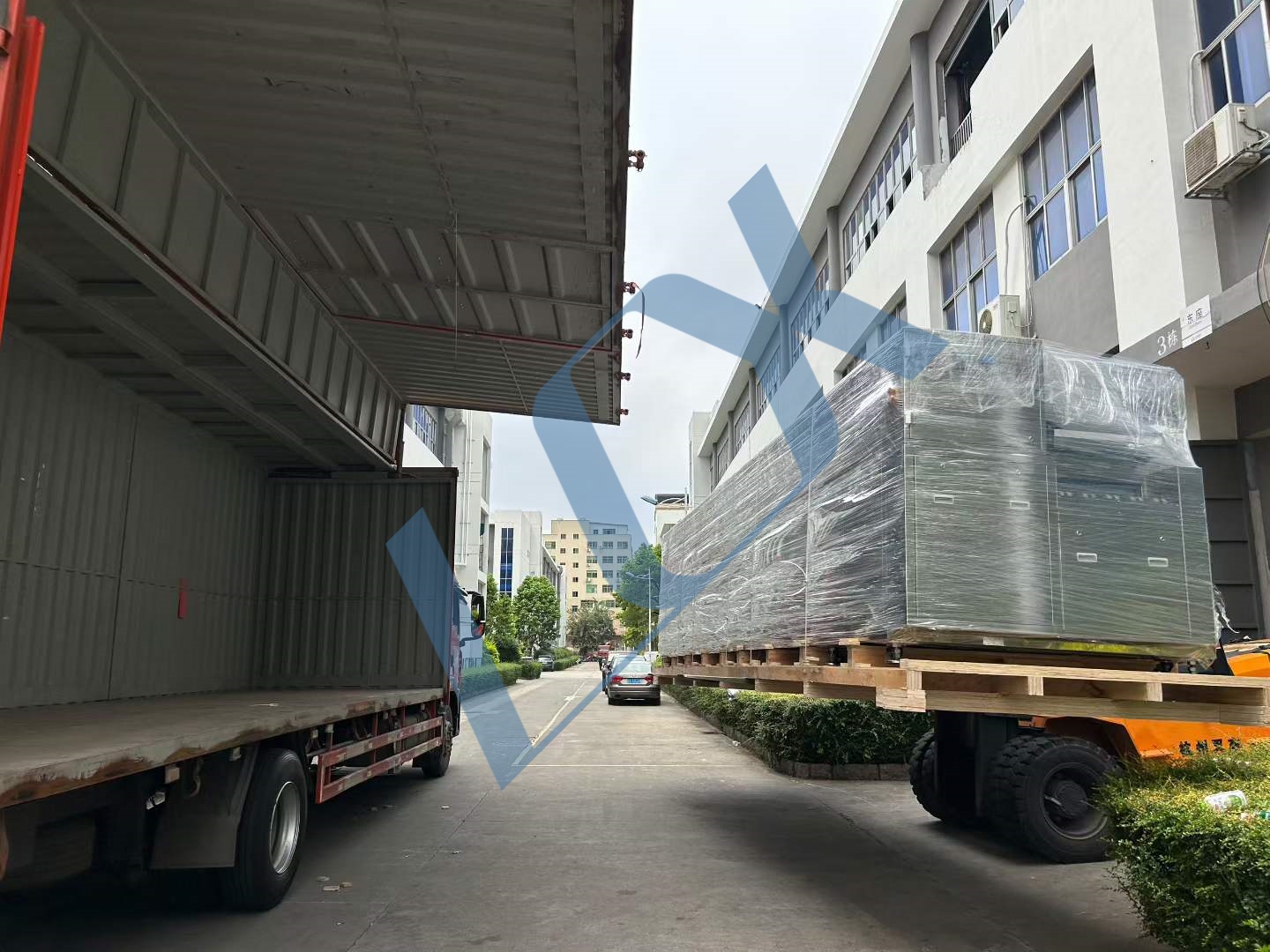
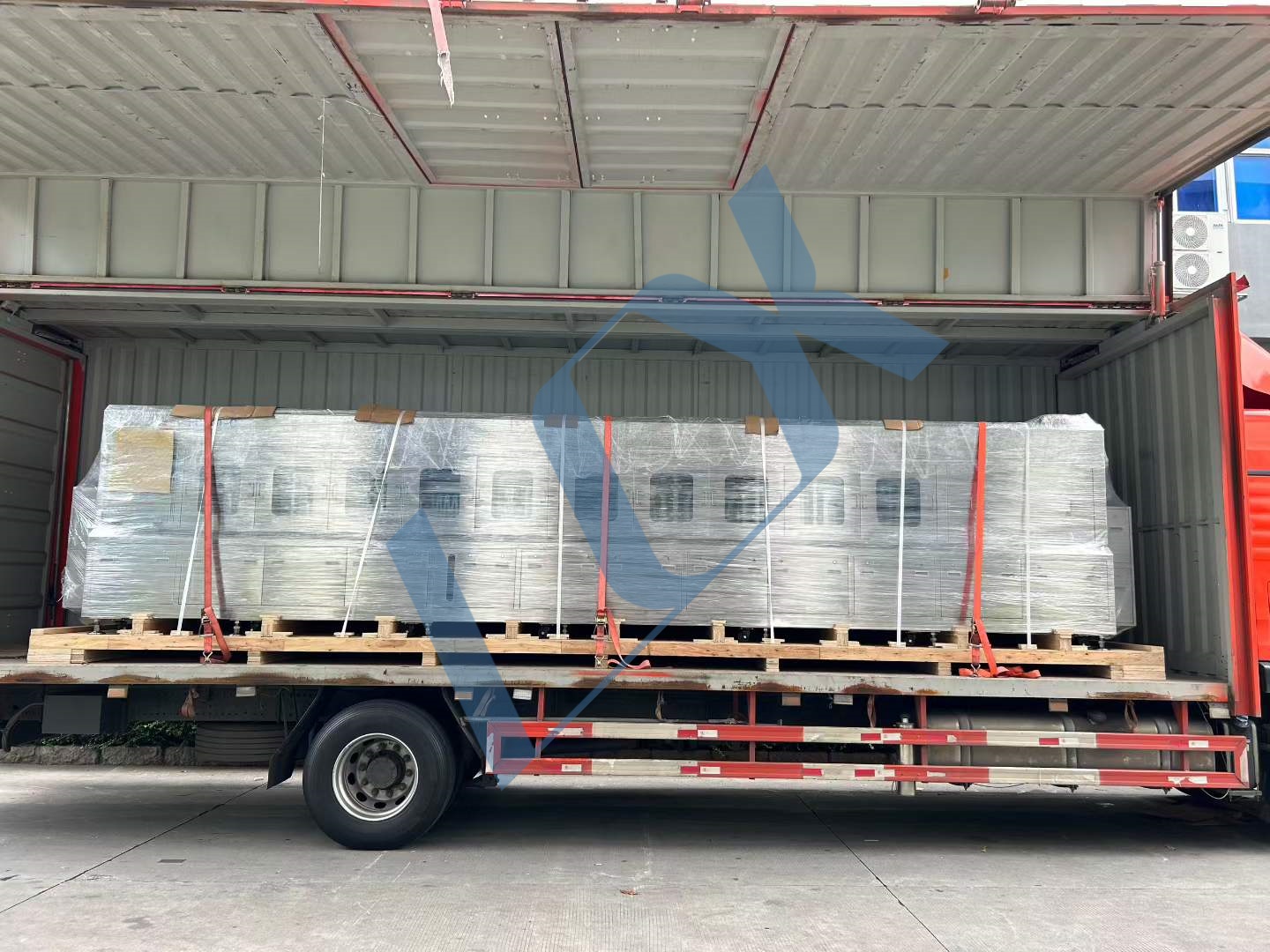
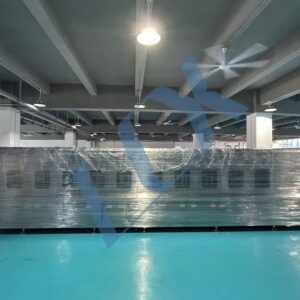
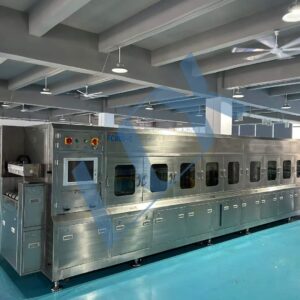
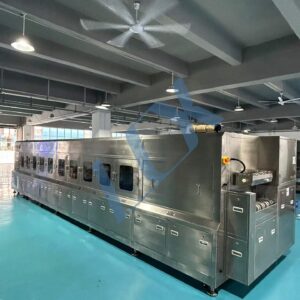
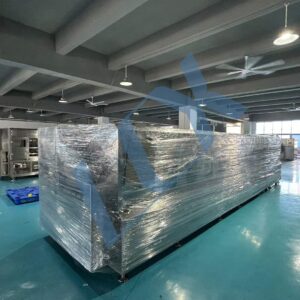
1. Appearance and Structural Features (corresponding to the design in the diagram)
* All-stainless steel body: Made of SUS304/SUS316L stainless steel, corrosion-resistant, easy to clean, and suitable for cleanroom environments.
* Multi-tank modular design: Multiple observation windows and cabinet doors are visible in the diagram, corresponding to independent process tanks for “ultrasonic rough cleaning → fine cleaning → multi-stage rinsing → hot air/vacuum drying”.
* Automatic transfer system: Built-in robotic arm/stepping conveyor mechanism enables automatic loading and unloading of workpieces and cross-tank transfer without manual intervention.
* Adjustable feet: Bottom support feet are used for level calibration to ensure stable equipment operation.
2. Core Cleaning Principle (Ultrasonic + (Multi-process linkage)
Ultrasonic cavitation effect: High-frequency sound waves generate microbubbles in the cleaning fluid. The impact force generated by the bursting of these bubbles removes stubborn contaminants from workpiece crevices and blind holes.
Multi-stage rinsing process: Through step-by-step rinsing with pure water/IPA, residual cleaning agents and contaminants are thoroughly removed, avoiding secondary contamination.
Closed-loop drying system: Hot air drying + HEPA filtration, or vacuum drying, ensures that the workpiece is free of watermarks and residues, allowing it to directly enter the next packaging process.
Intelligent control: PLC + touch screen programming allows for customization of cleaning time, temperature, and power to adapt to the process requirements of different workpieces.
III. Differences from other optical module cleaning equipment
Table: Equipment Type | Core Technology | Applicable Scenarios | Differences from this equipment
This equipment (multi-tank ultrasonic) | Ultrasonic cavitation + multi-process integration | Optical module assembly, metal parts, TOSA/ROSA batch pretreatment | Deep batch cleaning of non-optical end faces, suitable for mass production lines
Liquid-gas dual-phase end face cleaning machine | Atomized solvent + airflow purging | Fiber optic end faces, MPO/LC connectors, module ports For non-contact cleaning of optical surfaces, single-station/small-batch dry ice cleaning machine with CO₂ supersonic jet cleaning removes ceramic ferrules, epoxy/flux residues, and leaves no chemical residue. Suitable for specific stubborn contaminants, primarily single-station operation.
IV. Core Selection and Process Considerations
1. Key Performance Parameters
Ultrasonic Frequency: Multi-frequency adjustable (40kHz/68kHz/132kHz), adaptable to different workpiece materials.
Tank Configuration: 8-15 tank modular design, customizable for rough cleaning, rinsing, and drying processes.
Water Quality Requirements: Pure water resistivity ≥16MΩ・cm, meeting high cleanliness requirements.
Capacity: Daily processing capacity up to tens of thousands of pieces, suitable for 24-hour continuous mass production.
2. Process Avoidance Guidelines
Strictly prohibit the use of highly corrosive solvents to avoid damaging optical coatings and metal coatings.
Requires a circulating filtration and oil-water separation system to extend the cleaning fluid lifespan.
High-speed optical modules require surface cleanliness testing (particle counting, TOC testing) to ensure process compliance.
Must meet ISO 14644-1. Cleanroom standards prevent secondary contamination.
V. Industry Application Value
This equipment is the core pre-processing equipment for optical module mass production lines, directly determining the yield of subsequent packaging, coupling, and testing:
It solves the problems of poor consistency and low efficiency of manual wiping, improving mass production stability.
It deeply removes micron-level contaminants, reducing insertion loss and return loss of optical modules.
It automates the entire process, reducing manual contact and meeting high-cleanliness production requirements.
LCX Copyright © 2026 All Rights Reserved.